Sunday, November 25, 2018

This Blessed Plot, This Earth, This Realm

Sunday was Reading Out Loud Meetup.  The topic was British writing so  titled the event "This Blessed Plot, This Earth This Realm."  I read the opening passages of Thomas Hardy's Return of the Native and David Lodge's Nice Work (my shrink likes David Lodge).  Our other reading included Kipling's "Harp Song of the Dane Women" and W. Somerset Maugham's "The Verger." There was a British guy there with a lot to say--too bad I'm terrible at remembering names.  I like events where we don't just read texts but talk about them too!

Wednesday night I went to another Organizers Meetup, and met some more new people.

Thursday night we got the chorus staging straight for The Marriage of Figaro in the gym section of St. Matthew's. (I have the music down cold by now.)

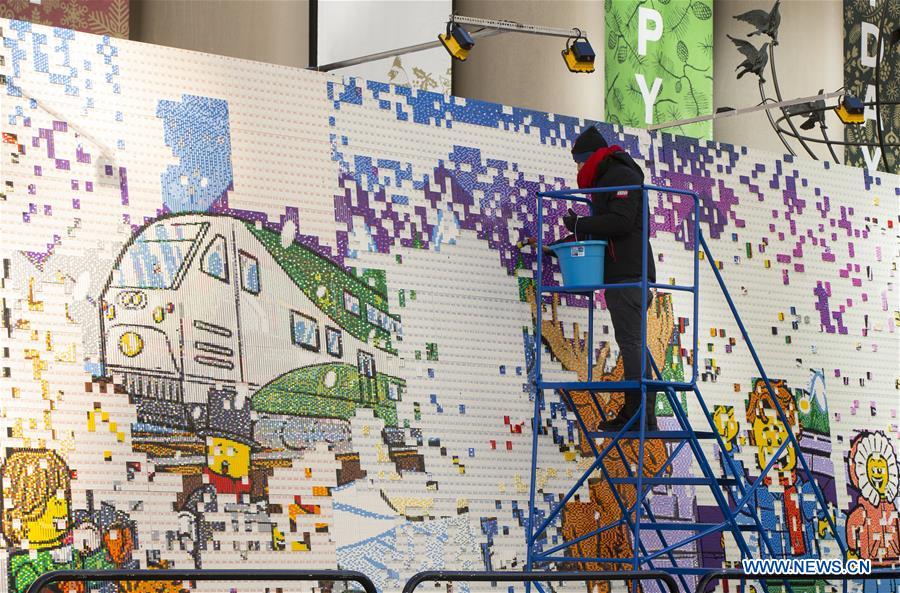
Just today Miriam and I went to see the Lego mural people are assembling outside Union Station.  She likes talking with me a lot.

I've started watching online the third season of Sailor Moon, which I've never seen before.  There are two new sailor senshi, Sailor Uranus and Sailor Neptune, who come across as butch and femme. This time the monsters are out to steal pure hearts to find talismans or something...

I reached a dead end in that Golden Valley game, so I quit.  Now I've started the new games Farmcliff and Gold Frontier, both of which remind me of the Zynga game Frontierville, which I used to enjoy greatly.

Thursday, November 22, 2018

Geometric fun

I was doing some geometric figuring a few days ago.  Zero dimensions:  a point is a point.  One dimension:  a segment has two end points.  Two dimensions:  a square has four sides, with eight points coming together in twos to make four corners.  Three dimensions:  a cube has six faces, 24 segments coming together in twos to make twelve edges, and 24 points coming together in threes to make eight corners.

If you put all this together you can see a pattern:

Points      1     2     2*4/2=4     4*6/3=8     
Segments        1     4                4*6/2=12
Squares                  1                6
Cubes                                       1
Total         1     3     9                27

Horizontally, the number of points are exponents of two. But if you look at the diagonal lines upper left to lower right, you'll see a constant one, then a progression of even numbers, then the number to the left multiplied by the even number below and divided by two, then the same but divided by three, then four and five and so on.  And notice the total for each column:  exponents of three!

It follows that you'd get the following numbers for a tesseract and further dimensions. (Can't visualize it, but I can calculate it!)

8*8/4=16     16*10/5=32     32*12/6=64
12*8/3=32    32*10/4=80    80*12/5=192
6*8/2=24     24*10/3=80     80*12/4=240
8                    8*10/2=40     40*12/3=160
1                    10                   10*12/2=60
*                     1                    12
*                      *                    1
Total: 81          243               729

But then I thought about triangles, tetrahedra (four faces) and tetrahedral tesseracts!  It's the same for zero and one dimension, but then it gets different.

2*3/2=3     3*4/3=4     4*5/4=5
3                3*4/2=6     6*5/3=10
1                4                 4*5/2=10
*                1                 5
*                                   1
Total     7     15            31

This time, instead of 1, 2, 4, 8... the top row is 1, 2, 3, 4... Instead of 2,4,6... the first diagonal line is 2,3,4...  And the total is exponents of two minus one!

I suppose I could also do this for pentagons and docedahedra (twelve faces) and dodecahedral tesseracts and beyond, and even for the other Pythagorean solids: triangles and octahedra (eight faces), or triangles and icosahedrea (20 faces). This stuff fascinates me.

Sunday, November 18, 2018

THE HAPPY PRINCE

"I've suffered a broken heart, but hearts are made to be broken.  That's why God sent sorrow into the world..."--The Happy Prince

Wednesday I saw theRevolutionary Girl Utena movieAdolescence Apocalypse (for the second time) on Youtube.  It's a rhapsodic mess, which gets bizarre in the last part when Utena gets transformed into a car that Anthy races into the outside world! (Nanami only appears briefly, alas, in her bovine form.)

At Thursday night's opera rehearsal, we did some more acting exercises.  I pretended to put a pet mouse down Heather's back!

Yesterday I went to Wal-Mart and bought a new pair of pants, new slippers and a new tee and polo shirt. (I also got some bulk peanuts!) I'm finally wearing my winter boots now, what with the snow.

Today I saw Rupert Everett'sThe Happy Prince, about Oscar Wilde's struggling last years, with Anne and her friend Javeed at the Carleton. Bitterly compelling.

Wednesday, November 14, 2018

1920: THE YEAR THAT MADE THE DECADE ROAR

"Neither race had won, nor could win, the [First World] War.  The War had won, and would go on winning"--Paul Fussell, quoted in 1920:  The Year That Made the Decade Roar

"We're all trapped in our coffins"--Revolutionary Girl Utena

Friday night the History Meetup discussed Poland. There were ten people there! (One guy knew a lot about World War II aircraft.)

Sunday afternoon I visited Giuseppe, my former singing teacher, for the first time in ages.  I'd tried a few times recently, but this time he was actually in!

The other day I finished watching the series Revolutionary Girl Utena on Youtube.  It has a superb ending, reminiscent of One Flew Over the Cuckoo's Nest. (Watch the clip above through to the end of the credits!) I have a feeling people will be talking about that show for centuries...

Today I went to Deer Park library and borrowed Eric Burns' 1920:  The Year That Made the Decade Roar. (It's a large print copy, like books for children.) The 1920s was a more complex time than people often assume.

The cold weather has arrived and I'm finally wearing my long johns and furry cap.

Thursday, November 08, 2018

Fundraising

Sunday afternoon was my opera group's fundraiser at the Columbus Center. (Tatiana had a cute purple thing in her hair!) On the way home I took the bus to Lawrence West station only to see signs saying that the subway along that line had been replaced by shuttle buses.  So I waited for a bus to come, but none did.  Finally I figured out that the subways were running again, and I got home rather late. (Should have gone home by the Dufferin bus...)

Monday night the Celtic Culture Meetup discussed William Butler Yeats' poetry.  We recited quite a few poems, and I sang "Down by the Sally Gardens" a cappella!

Tuesday I went to the Royal Winter Fair.  It's the closest I get to visiting the country.

Wednesday night I had dinner with Miriam's Meetup group. We were going to eat at Japango, but that place looked too small and crowded, so we went to Kimchi House instead.

I finished the Lincoln book and returned to the Lapham's Quarterly Discovery issue.

Friday, November 02, 2018

Abraham Lincoln: A Life

Abraham Lincoln (running for office): "If elected, I will be thankful.  If beaten, I can do as I have been doing, work for a living."


I finally finished that book of Polish history, but it turns out that the History Meetup is next Friday instead of today.  Oh well, better early than late! (It could have used better editing: I noticed some spelling mistakes.)

The subject of next month's History Meetup will be Lincoln's America, so I've started reading Thomas Keneally's Abraham Lincoln:  A Life.  That's another book in the Penguin Lives series--like Paul Johnson's book about Napoleon--by the Australian writer who did The Chant of Jimmie Blacksmith and Schindler's Ark.  It looks like another good read.

I'm always interested in reading about Lincoln.  I wish my mother were still with us so I could tell her how he "dropped a brick" when he came to someone's door and asked "Is Miss Rodney handy?" ("Handy" could mean at hand, but it could also mean a fast girl...) Or how he came to a party and said, "Oh boys, how clean those girls look!" Mother was interested in Lincoln too, and felt sorry for his unstable wife.

Last night at opera rehearsal we met our stage director for the first time.  She had each of us say his name and something interesting about him:  all I could think of at that moment was how good I am at Candy Crush Saga!  Then she divided us into four groups and had us do exercises like I've done in acting class, like throwing around an invisible ball.  We're going to be human maze rows in The Marriage of Figaro. (I have a feeling it won't be your normal opera production...)

Wednesday, October 31, 2018

Times change, and we change with them

"Americans can't be whipped!"--How the West Was Won

Today I used our Metropass for the second-last time, went to Shoppers Drug Mart and bought a Presto card. (The last time was later when I went to Ali Baba's and bought falafel wrap takeout.  I've been getting their Tuesday special so often that they're getting to know me there!) Now I'll be able to get an annual subscription and even get the ODSP discount.

While I was at Shoppers Drug Mart I also renewed my Cipralex prescription and had another 20-minute wait.  This time I went to Wells Hill Park and read more of the Polish history book.  I've finally got to the all too exciting 20th century part.

Saturday night I downstreamed the Cinerama western How the West Was Won, a guilty pleasure of mine.  The HD picture was so crisp that I could often see the seams between the picture's three sections! Gregory Peck is amusingly cast against type as the gambler.  George Peppard is so (uncharacteristically) good in the Civil War sequence John Ford directed, and so weak in the rest of the movie, that he's like two different actors! Great musical score by Alex North.  Of course, Jimmy Stewart was too old for Carroll Baker...

Sunday was the Classic Book Club, where we discussed Robert Louis Stevenson's The Strange Case of Dr. Jekyll and Mr. Hyde.  I argued that Jekyll is actually worse than Hyde:  while Hyde acts evil because it's his nature, Jekyll makes a free choice to turn into someone he knows will do bad things, while maintaining "plausible deniability"!

Saturday, October 27, 2018

Under the weather

"Nothing wrong with 'dead reckoning' navigation'--except for the name!"--The Spirit of St. Louis

"When grownups say something is "for your own good," don't trust them!"--Revolutionary Girl Utena

I have a bit of a cold, which has slowed me down. (I've been eating pomelo grapefruit for it.) I had to leave last night's opera rehearsal early, but before I did there was a fun bit where we walked around singing the Nabucco chorus, to get us used to singing and walking at the same time!  We've been rehearsing in the choir seats at St. Matthew's, but for this we walked among the pews.

I've finished two seasons of Dragon Ball and the first two-thirds of Revolutionary Girl Utena that I'd seen before.  But now I'm going to take a break before seeing the rest, and focus on finishing that book of Polish history before the Meetup a week from now.

Tuesday night I saw The Wife with Anne.  It's about a Nobel Prize-winning writer whose wife (spoiler alert!) has always been rewriting his drafts.  Seems to me they should do that more often:  two literary heads can be better than one.  I was thinking that I'd be good at the wife's job! Christian Slater has a good role as a nosy biographer.

Tonight I watched Billy Wilder's The Spirit of St. Louis for maybe the fourth time.  I streamed it through Google Play for just $5.00, and used Chromecast to watch it on our downstairs set in high-def, in all its Cinemascope glory! (Earlier versions I recall seeing with the sides cut off.)

Granted that the movie's uncharacteristic of Wilder, lacking most of his usual acerbic wit. And of course James Stewart was a lot older than the real Lindbergh.  It's more Lindbergh as Stewart than Stewart as Lindbergh, like Lisztomania was Franz Liszt as Roger Daltrey.  (That's a rather understandable choice, considering that the real Lindbergh wasn't big on personality:  as someone with Asperger's Syndrome, I think he had it too.) But I still greatly enjoy the movie, whose second half is mostly a Stewart monologue during his flight.  High adventure, with a striking musical score by the great Franz Waxman.

Sunday, October 21, 2018

Don't go in the woods!

Today was the latest Reading Out Loud Meetup, and the topic was scary writing:  the event title was "Don't go in the woods!"  We ended up going on for a full two hours!

I read the chapter in Huckleberry Finn where they find a corpse in a floating house and the one in Tom Sawyer where they're digging for buried treasure; Hemingway's "On the Quai in Smyrna" (about Greek refugees leaving Turkey); Robert Louis Stevenson explaining how Dr. Jekyll and Mr. Hyde came out of his dreams; Christina Rosetti's poem "Goblin Market"; and T. Coreghessan Boyle's "Greasy Lake." (About which, remind me not to move to the U.S.!) The others were reading Poe poems, part of T.S. Eliot's "The Waste Land," and some Kafka.

We used Chromecast to watch a Youtube video of Pacific Overtures on our downstairs TV.  That's a 1976 kabuki-style Stephen Sondheim musical about Japan being opened to the west in 1853, and this video is of the original production!  We saw the first part, but couldn't make the Chromecast thing work later on.

Thursday at the opera rehearsal we were getting measured for costumes amid much confusion.  This year they're giving The Marriage of Figaro a Pop Art look, with everyone wearing wigs that are black on one side and white on the other, and it looks like I'll be the Andy Warhol type! We've been learning our few numbers from that show, along with the opening number from Mascagni's Cavalleria Rusticana, for the fundraising show the week after next.

We got the DVD miniseries The Night of... from the library, but couldn't get past the first episode!  It's about an Arab student in New York City who meets a fast girl and ends up getting charged with murder. Reminded me of the New York movie A Most Violent Year, which I couldn't sit through either: we get to watch things get worse and worse... (Remind me too not to move to New York.)

I've finally quit those Vikings and Throne games, and started another town-building game called Golden Valley.  And I finally gave up on getting past Level 1880 in Candy Crush Saga and went back to playing the early levels. (I see myself as the Son Goku of Candy Crush Saga--that's the young martial-arts prodigy in Dragon Ball.)

Thursday, October 18, 2018

THE BLUE MAX

This evening the History Meetup screened The Blue Max, a mid-'60s movie about German pilots in World War I. (Once again, Malcolm provided the DVD.) The flying scenes were realistic, but George Peppard was a hopelessly lightweight lead!

I've started putting some compost on the garden.  It's pretty dry.  John's planning a big expansion of the garden next year!

A few days ago I saw some episodes of Dragon Ball where Goku visited Penguin Island, setting of the earlier Akira Toriyama anime Dr. Slump.  A couple of the characters looked familiar, and I found the intro of the show's second version on Youtube.  (For the record, Dr. Slump is a comedy about a scientist inventing a robot that looks like a little girl, like that low-budget '80s sitcom Small Wonder with the ear-worm theme song.) I'd seen this intro before.

Back in 1999, I came over to brother Donald's house to print out a draft of my Ph.D. thesis on his computer.  It took a long time to print, and to pass the time Donald showed me some anime videos he had. (He compared them to the "chaser" acts they put on at the end of vaudeville shows, encouraging the audience to leave.) One of them was that Dr. Slump intro, one of the stranger things I've seen in my 56 years.
Now you've seen it too, o reader!

Monday, October 15, 2018

REVOLUTIONARY GIRL UTENA

The other day I finished the second season of Sailor Moon and for a change started watching the smashingly bizarre series Revolutionary Girl Utena, a gender-bending "magical girls" anime about a lass who was orphaned at an early age but comforted by a "prince" who gave her a ring and promised they'd meet again. She was so inspired by him, however, that she decided to become a prince herself! "But was that such a good idea?" 

Now Utena's attending the prep school Outori Academy, where she wears a male uniform, plays sports with the boys and generally acts the tomboy.  Check out the names:  her surname, Tenjou, means "the heavens," while Outori means "phoenix"--though there's a good chances that it's also a reference to Outori Ran, who achieved stardom playing male leads in the Tarakazuka theatre's famous all-female musical shows. (The Japanese love those multiple meanings!)

At the school there's this mostly male Student Council who fight secretive fencing duels, whose winner becomes "engaged" to the Rose Bride (dark-skinned student Anthy) which means she has to serve him and do whatever he wants.  But Utena wins a duel and the Rose Bride belongs to her--why yes, the show does have lesbian overtones!-- and she ends up in successive swordfights...

Verbal description only scratches the surface of this show's remarkable style.  Directed by the flamboyantly gay Kunihiko Ikuhara, who directed much of Sailor Moon--with several of that show's animators here--it has an incredibly imaginative look, from the late-Meiji time a century ago when Japan's elite was superficially westernized, with lots of rose imagery. (The music is also impressively eclectic.) I also like the shadow puppets who comment on the story midway through! My favorite character of all is Nanami, a bitchy little blonde usually making trouble with her three-girl posse.  

I saw the first part of this show on video almost twenty years ago, but haven't seen the last third. (I've also seen the feature movie, which I recall was rather confusing.) BTW, that photo is of Sailor Pluto, my new favorite sailor senshi whom I mentioned in the last post.


Wednesday, October 10, 2018

Anime

"The problem with the world isn't the existence of evil, it's the existence of good--otherwise nobody would care"--Fargo

I've almost finished rewatching the second season of Sailor Moon.  I used to think that my favourite Sailor Scout was Venus, but now I think I prefer Pluto, the one in black boots who perpetually guards the doorway to time. (Saturn would really have been a better name for her.) I'll soon be looking at later seasons I didn't see back at the time!

I really like the song they play over the end credits of the Japanese version of the second season.  I even came up with a translation of the lyrics. (Translating Japanese into English isn't as hard as some translation, since they tend to say in ten syllables what we say in five and it's easier to stretch lines longer than squeeze them shorter.) Allcaps indicate an accented syllable, dashes one that's stretched out.

DON'T give UP, NO matter WHERE you are, whatEVer preDICament YOU may SEE!
THAT'S-ME, that's WHO I AM, that's the PRETty young MAIDen's POliCY.
SOME-DAY I'LL meet the SPEcial one, for HIM I'll do ANything, I won't FLEE,
FOR-HIM I'll RAISE my CHIN and LEAP inTO the FIGHT!

Down IN my BE-ING,
There's A sad YEARN-ING,
But LOVE will SOON come OUT aGAIN!

I'm aFRAID of NOThing FEARsome, of COURSE,
It's BETter to LIVE with PASsion, of COURSE,
I have DREAMS that are MANY and BIG ones, of COURSE.
THAT'S-WHY I'll BE a courAGEous GIRL!

ALL will COME, MONsters, DisASters, I'm GOing to FACE it all MANfulLY!
IN these TESTS-IS my CHANCE to SPREAD out my WINGS and fly GRACEfulLY,
For EVeryONE-LOOKS twice as BEAUtiful WHEN they apPROACH their task MINDfulLY.
I'LL beLIEVE-IN mySELF as I TAKE on the FUTure PLIGHT!

In SIDE my NA-TURE
Is A strong CREA-TURE,
And SOMEday OUT she'll POUR like RAIN!

I'll beCOME whatEVer I'm SEEKing, of COURSE,
It's BETter to conTINue perSISTing, of COURSE,
There will ALso be SORrow and WEEping, of COURSE,
But ANyWAY, I'll BE a courAGEous GIRL!
(So what if "continue persisting" is redundant and "everyone" is singular rather than plural?  It fits the rhythm.)

I've also started the second season of Dragon Ball.  As I said before, it's really a show for little boys, but I do find it fun.  My favorite character is the teenage girl Bulma, probably because she's usually getting pissed about something. (Siegfried the enemy agent was my favorite Get Smart character, for much the same reason.) She generally has reason for her annoyance:  Japanese men seem to treat women a lot worse than in the west! (Even when a Japanese lady gets appointed to a corporation's Board of Directors, she's still expected to serve the tea for the men...)

I finished harvesting the potatoes the other day and brought in the carrots today. Today I also gave our lawn a last mow. (Unusually warm weather for October!)

Finished Fargo.  I got caught up through seeing two episodes a day--the closest I can get to binge-watching--and we saw the last episode together.  The third season may be the best of all, though the Hollywood episode and the bowling alley scene were pretty odd.  It got rather Lynchian, to the point of having Ray Wise (the possessed lawyer on Twin Peaks) show up both times!

Sunday, October 07, 2018

The greatest people of the 16th century

I shall now make my incomplete list of the greatest people of the 16th century:

Christopher Columbus (1451-1506) and Vasco da Gama (1460s-1524): Explorers who greatly widened the scope of the world as seen from Europe. Columbus, a Genoese working for Spain, discovered the sea route from Europe to America in 1492 and claimed Caribbean lands for his king, setting a precedent for brutal colonialism; da Gama, sailing south around Africa for Portugal, reached India in 1497, transforming world trade and starting a golden age for his kingdom.

Leonardo da Vinci (1452-1519), Michelangelo Buonarroti (1475-1564), and Rafael (1483-1520):  the three greatest artists of the Italian Renaissance, towering figures in Europe's art legacy.

Francisco Pizarro (1471-1541) and Hernan Cortes (1485-1547): The two most successful Spanish conquistadors.  Cortes conquered Aztec Mexico in 1521; Pizarro Inca Peru in 1532.  These conquests, both greatly aided by the accidental introduction of European smallpox, greatly increased gold and silver production in the Spanish empire.

Nicolaus Copernicus (1473-1543): Polish astronomer who published (on his deathbed) a theory that replaced the classical view of a geocentric universe with a heliocentric solar system.  This theory, resisted by the Roman Catholic Church, is central to modern astronomy and ultimately led to the theory of a universe with NO center.

Martin Luther (1483-1546):  German heretic whose 95 Theses started the Reformation, which resulted in most of northern Europe breaking away from the Roman Catholic Church.

Babur (1483-1530) and Akbar (1542-1605):  The two greatest rulers of Moghul India.  Babur, starting from today's Afghanistan, established the Moghul Dynasty in India with his 1526 conquest of Delhi; Akbar brought the empire to its pinnacle, dominating northern India.

Ismail I (1487-1524):  First Safavid Shah of Iran, unifiying the nation for the first time in centuries under the Shi'ite sect distinct from its Sunni rival the Ottoman Empire.

Saint Ignatius Loyola (1491-1556): First Superior General of the Society of Jesus.  The Jesuit order he founded, with an emphasis on intellectual rigor and assertive salesmanship, became one of the leading organs of the Counter-Reformation and is still active today.

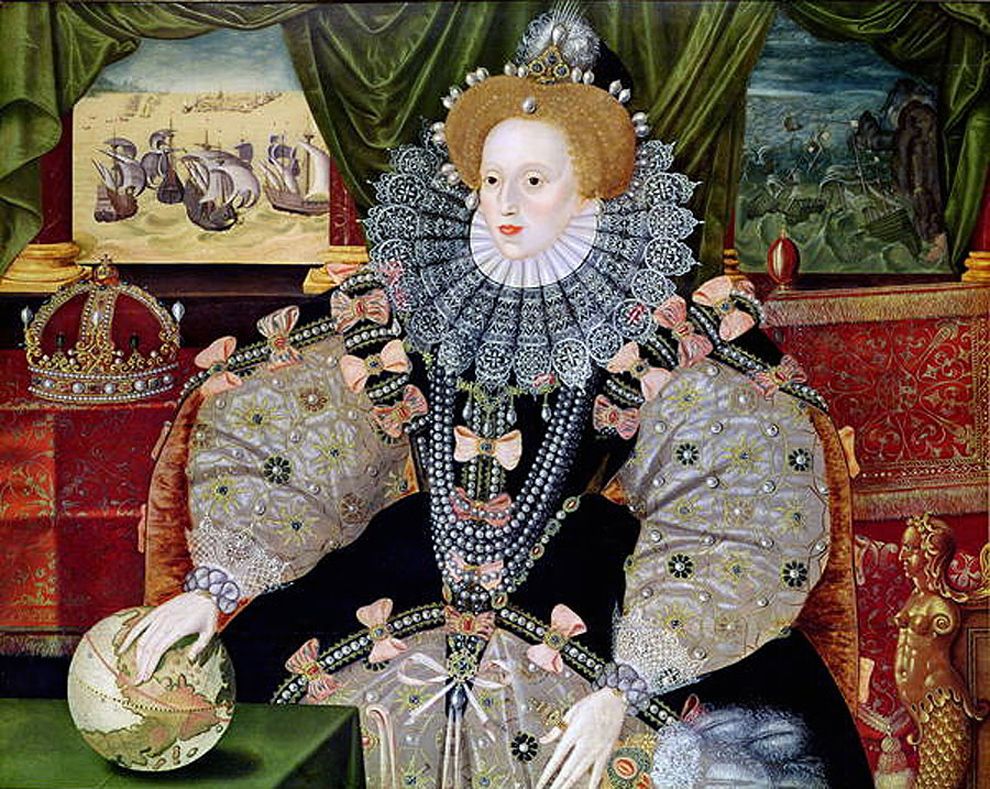
Henry VIII (1491-1547) and Elizabeth I (1533-1603):  England's two great Tudor monarchs, father and daughter, who reigned for over eighty years between them.  Their age was a turbulent time for England, marked by the Reformation, cultural advances and the beginnings of England's overseas empire.

Suleiman the Magnificent (1494-1566):  Long-reigning Turkish Sultan who brought the Ottoman Empire to its peak with the conquest of eastern Hungary, dominating the eastern Mediterranean and posing a challenge to Christian Europe.

William Tyndale (ca. 1494-1536): Reformation scholar known for his work translating Biblical scripture into English. Though put to death by Imperial officials, his legacy lives on in the greater part of the King James Bible.

Gustav I (1496-1560): First king in the Vasa dynasty, establishing Sweden's independence from the Danish-Norwegian union and overseeing the society's conversion to Lutheranism.

Charles V (1500-58): Habsburg Holy Roman Emperor and King of Spain for almost forty years.  He assembled a huge realm but faced increasing pressure from the Reformation in northern Germany, and ultimately bequeathed the Empire and the Spanish kingdom to different heirs.

John Calvin (1509-64): French-born theologian who became a Reformation leader in Geneva.  He founded the tradition of Dissenter sects that would be carried on by churches such as the Baptists, the Presbyterians and the Dutch Reformed Church.

Andreas Vesalius (1514-64): Flemish physician whose publication De Humani Corporis Fabrica established modern anatomy.

Philip II (1527-98):  Habsburg king of Spain for over forty years, ruling an empire that included much of the Americas, Italy, the Netherlands and eventually Portugal.  His challenges included the Counter-Reformation, economic absorption of inflationary bullion from the colonies, new English rivalry and a persistent insurgency in Holland.

Ivan the Terrible (1530-84): First Tsar of Russia, he turned the Grand Duchy of Muscovy into an empire, defeating Tartars and rebels and starting the eastward expansion into Siberia.  During his long reign he became notorious for tyrannical methods and explosive rage.


William the Silent (1533-84): Prince of Orange who led the Dutch rebellion against Spanish Catholic rule, becoming first Stadtholder of the United Provinces.

Michel de Montaigne (1533-92): French philosopher whose essays stand as an early example of modern thinking.


Domenikos

Theotokopolous "El Greco" (1541-1614): Greek-born painter who became the greatest artist of Habsburg Spain.
Thursday, October 04, 2018

FARGO

"'If he be Mr. Hyde,' he had thought, 'I shall be Mr. Seek'"--The Strange Case of Dr. Jekyll and Mr. Hyde

"Surmise!"--Fargo

We've started watching the library DVDs of the third season of Fargo, the loose and surprisingly adept reworking of the 1996 American gothic absurdist movie.  We started watching it together but I fell behind the others. (Usually, I'm the one who's ahead.) This one has Ewan MacGregor playing two brothers!

I'm in the last part of Dr. Jekyll and Mr. Hyde.  We get shown surprisingly little of Hyde, like Kurtz in Heart of Darkness. (Less can be more.) There's something Nietzschean about this double character!

Monday night I went to the Celtic Culture Meetup.  We were discussing Samuel Johnson's account of visiting the Scottish Hebrides, which I hadn't got around to reading. But it was still a good discussion, with a full turnout! (My mother was very interested in Samuel Johnson.)

Saturday, September 29, 2018

FOR YOUR EYES ONLY

On the witnesses describing Mr. Hyde: "Only on one point, were they agreed; and that was the haunting sense of unexpressed deformity with which the fugitive impressed his beholders"--Dr. Jekyll and Mr. Hyde

I saw two or three episodes of The Bridge, but it got too creepy for me.

Wednesday night I went to the Singing Meetup, where we sang Creedence Clearwater Revival's "Have You Ever Seen the Rain?"

I finished the history of modern Japan, and yesterday borrowed Robert Louis Stevenson's novella The Strange Case of Dr. Jekyll and Mr. Hyde from the Deer Park library.

Today I saw For Your Eyes Only with Dawna.  It's the first time I saw it since its 1981 release, and back then it was the first James Bond movie I'd seen, so I knew no points of comparison.  

In contrast to the previous series entry, Moonraker, this one's a visually unambitious production with the emphasis on action.  The first of five directed by John Glen, it has several well-staged "set pieces," especially the opening run-in with Blofeld. (The scenes with the young figure skater made Roger Moore look even older...)

I dug up another row of potatoes from the garden.  It was a good year:  our biggest bowl got filled again, and there are still a couple of rows left!

Sunday, September 23, 2018

THE BRIDGE

We've started watching The Bridge, a Scandinavian TV series where a woman's corpse turns up on the bridge between Sweden and Denmark and a team of Swedish and Danish detectives have to work together.  Actually, it's two women:  the body's top half is a Swedish politician the bottom half is a Danish sex worker, which is just the beginning of how complicated it is! (They're going to make a British version.)

It turned out I didn't need to get my eyesight checked after all.  The problem was that the sun's glare gave me headaches when I went outdoors on a clear day, and I solved it by adding shades to my glasses.

Wednesday night we screened Vanessa Redgrave's Mary, Queen of Scots for the History Meetup.  Nine people came, probably a record!

Thursday night at opera rehearsal we started with the Slaves' Chorus from Verdi's Nabucco.  I'd sung that piece a lot and knew my notes well, except I sometimes forgot I'm now singing tenor instead of baritone!  We also got a start on the Drinking Song from La Traviata.

Friday afternoon I saw some more videos with Dawna.  We looked at an I Dream of Jeannie episode where a space chimp gets turned into a human played by Larry Storch (I remember seeing that in my childhood!); and the pilot episode of The Odd Couple.  But I had a headache and left early.

I've got to the second season of Sailor Moon with subtitles. The story arc right now involves Alan and Ann, who seem like normal schoolkids but are actually aliens stealing human energy to feed their Doom Tree!  This arc includes my personal favourite episode, where they're putting on a play of Snow White, but the show gets interrupted by a clown monster and it turns into a Power Rangers show!  I like the closing credits' song. (See above.)

I've finally quit that game Empire.  Friday I captured a resource village in the winter realm and the owner's alliance blitzed me until almost all the buildings in both of my cities seemed to be on fire! (You have to put the fires out one at a time, and that can take over an hour for some.) My own alliance demoted me, as if I'd been aware of my status.  Why did I take such a risk? Because I'd been running out of doable quests to carry out.

Got my hair cut.

Tuesday, September 18, 2018

[Expletive Deleted]

Last Monday I found the book Anime Impact at the library with people reviewing the major Japanese cartoons, with a lot of personal experiences. Someone wrote, I josh you not: "Dragon Ball Z saved my life." (He was tempted to kill himself as a teenager, but the show gave him courage to carry on!) Brother John likes the pirate anime One Piece, so I'll have to try that one sometime.

Wednesday night I went to my first Music Meetup in a while. (It had been conflicting with my History Meetup screenings.) We sang "Hey Jude."

Thursday evening the opera chorus had its first session, at their new rehearsal location of St. Matthew's United Church, just a few blocks east of my home! (Very convenient.) Our two operas this year will be Mozart's The Marriage of Figaro and Verdi's La Traviata, which we haven't done for over a decade. Someone brought a cake, which was so good I ate three pieces.

Saturday afternoon I watched Jonathan Demme's Silence of the Lambs (for the second time) with Dawna.  I left before the last part where it got really scary!

Sunday was Read Out Loud Meetup, and since it was September the topic was banned and challenged books. (The event title was [Expletive Deleted]!) Noel was the only other person who showed up, but we had interesting conversation.  I read the opening pages of Theodore Dreiser's Sister Carrie; the closing pages of Richard Wright's Native Son; and the chapter of Mark Twain's Tom Sawyer where he and Huck witness a murder among bodysnatchers.

Today after the memoir group I went to the Indigo bookstore in the Manulife Centre and used half the gift coupons Miriam gave me to buy a Chromecast connection so we can stream movies online and watch them on our big TV set! (The place is pretty hectic since the upper floor is being renovated...)

Saturday, September 15, 2018

One of those days


Today Moira asked me to print out an address slip from an email she sent to my computer from hers.  As I did so, I saw the "delete" trash-can icon and somehow thought it was the PRINT icon!  So she had to send a second email.

Later I went to my eye doctor to get my sight checked, and they told me that they'd already booked me an appointment next Friday. When I got home it turned out that my father, also called James Matthews, had booked that appointment!

Also I went to the bank to pay my Visa bill.  I owed $221.61, so in the place where you write how much you want to repay I wrote $221.41!  Not a consequential mistake, but slightly embarrassing.

I just finished the Zoisite episodes of Sailor Moon.  What a great moment when Tuxedo Mask got stabbed in the back through Zoisite's treachery, and Sailor Moon's tears caused all seven of the Rainbow Crystals they'd been fighting over--I call them the Seven McGuffins--to float to her and form the Silver Crystal on her wand, and she realized that SHE was the Moon Princess they'd been looking for!  

There was another great moment soon after when she said she didn't want to fight any more, but when Kunzite (Malachite in the dubbed version) attacked them and left all the other Sailor Senshi unconscious, she raised her wand and managed to force him away!  And Zoisite got a remarkably graceful dying scene, considering how nasty he'd been. (He was a she in the manga, and became a she again in the dubbed version.)

I've been watching other anime through the Anilinkz website. One is Dragon Ball, which came before the more famous Dragon Ball Z.  It's full of panties jokes and such--I can see why the dubbers went straight to the Z series--but I have to admit it's pretty funny, and has an original look. (Believe it or not, it's a reworking of the Chinese legend about the Monkey King going west to India with a pig and a monk for enlightening Buddhist scriptures!)

I've also been watching Tenchi Muyo, about a dorky teenage boy who ends up having these kick-ass alien women living with him. (It's called the "harem" genre...) Apparently they got the idea from I Dream of Jeannie!

Monday, September 10, 2018

Bits and pieces

Hot Lips: "Frank, you are so above average!"--M*A*S*H

Saturday afternoon Dawna had the first Classic TV Meetup in a while.  We saw a Mission:  Impossible episode about finding stolen Inca treasures; the M*A*S*H episode where Frank was in temporary command and seized Hawkeye and Trapper's still; and a One Day at a Time episode where she applied for a job with a promiscuous boss.

Wednesday night the History Meetup discussed Babylon. Today the Classic Book Club discussed Heart of Darkness.

I liked the DIC company's dub of Sailor Moon, but I have to admit that the subtitled version is way better! (Some of the dialogue changes seem inexplicable, as if they were changing just for the sake of changing it.) And I don't miss the preachy "Sailor Says" messages at the end of each episode--"Life is tough, but I'm tougher!"--or Molly's Fran Drescher-like voice.

Thursday, September 06, 2018

The greatest people of the 17th century

I decided to write another partial list, of the greatest people of the 17th century.

Tokugawa Ieyasu (1543-1616):  Japanese warlord who became Shogun who united the empire and established a Tokyo (then Edo)-based dynasty that restricted foreign contact until the 19th Century.

Miguel de Cervantes Saavedra (1547-1616): Spanish writer who published Don Quixote in 1605 and 1615, creating the modern novel.

Henri IV (1553-1610): King of France, originally Protestant King of Navarre, who converted to Catholicism, ended France's religious wars and established the Bourbon Dynasty.

Nurhaci (1559-1626):  Aisin Gioro chieftain who solidified power in Manchuria, from which his successors would conquer China and establish the Qing Dynasty.


William Shakespeare (1564-1616): London writer whose many plays and poems transformed the English language and are still performed four centuries later around the world.

Galileo Galilei (1564-1648) & Johannes Kepler (1571-1630): Italian and German astronomers.  Galileo used the first telescopes to discover satellites of Jupiter and promote Copernicus' geocentric theory of the solar system; Kepler explained the elliptical orbits of the planets.

Claudio Monteverdi (1567-1643): Italian composer who brought together the many elements of opera and made them into a single form.

Prince Maurice of Nassau (1567-1625):  Stadtholder of Holland who organized the Dutch war effort against the Spanish, revolutionizing battlefield tactics and making the United Provinces of the Netherlands a permanent nation.

Michelangelo Merisi di Caravaggio (1571-1610):  Italian painter whose dramatic chiaroscuro style revolutionized baroque art.

Abbas I (1571-1629):  Shah of Persia who proved the greatest ruler of the Safavid Dynasty, he took his empire to its peak of power.


William Harvey (1578-1657): English physician who discovered the human body's system of blood circulation, making physiology possible.

Cardinal Richelieu (1585-1642): French cleric who became Foreign Minister and then Chief Minister under Louis XIII, centralizing the state and promoting a foreign policy of resisting Habsburg power in Austria and Spain. The superpower status of France under Louis XIV was his legacy.

Gustaf II Adolf (1594-1632):  King of Sweden who intervened on the Protestant side in Germany's Thirty Years War.  Though he was soon killed in battle, he established Sweden as the dominant Baltic power for the rest of the century.

Mikhail I (1596-1645):  Russian Tsar, originally a boyar, who established the Romanov Dynasty in 1613, ending the long period of chaos that followed the death of Ivan the Terrible.

Rene Descartes (1596-1650) & Blaise Pascal (1623-62): French thinkers who reshaped mathematics and philosophy.

Gian Lorenzo Bernini (1598-1680):  Italian sculptor and architect, a leading force in the baroque movement who gave modern Rome much of its look.

Diego Velazquez (1599-1660):  A leading baroque painter of Spain's "Golden Age."

Oliver Cromwell (1599-1658): English Parliamentarian general who defeated King Charles I in the English Civil War, executed him and ended up an unofficial king.  Though he died before establishing an effective successor and Parliament brought back the Stuart Dynasty, the Glorious Revolution of 1688 and the resulting Parliamentary rule were his ultimate legacy.

John IV (1604-56):  Duke of Braganza who became King of Portugal in 1640 after driving out the Spanish rulers.

Rembrandt van Rijn (1606-69):  Leading Dutch Master painter in Holland's Golden Age.

Antonie van Leeuwenhoek (1632-1723): Dutch scientist who used the new microscope to establish microbiology.

Louis XIV (1638-1715): Long-reigning French King who developed an absolutist regime from his base in the palace of Versailles.  He made France into western Europe's leading power, leading to inconclusive wars with a coalition led by England, Holland and Austria.


Isaac Newton (1643-1727) & Gottfried Liebniz (1646-1716): English and German mathematicians who independently developed calculus, leading to modern engineering and much else. Newton also explained gravity and created modern physics.

Kangxi (1654-1722):  Chinese Emperor who solidified Manchu control over the empire and started a long period of stability.