Sunday, October 07, 2018

The greatest people of the 16th century

I shall now make my incomplete list of the greatest people of the 16th century:

Christopher Columbus (1451-1506) and Vasco da Gama (1460s-1524): Explorers who greatly widened the scope of the world as seen from Europe. Columbus, a Genoese working for Spain, discovered the sea route from Europe to America in 1492 and claimed Caribbean lands for his king, setting a precedent for brutal colonialism; da Gama, sailing south around Africa for Portugal, reached India in 1497, transforming world trade and starting a golden age for his kingdom.

Leonardo da Vinci (1452-1519), Michelangelo Buonarroti (1475-1564), and Rafael (1483-1520):  the three greatest artists of the Italian Renaissance, towering figures in Europe's art legacy.

Francisco Pizarro (1471-1541) and Hernan Cortes (1485-1547): The two most successful Spanish conquistadors.  Cortes conquered Aztec Mexico in 1521; Pizarro Inca Peru in 1532.  These conquests, both greatly aided by the accidental introduction of European smallpox, greatly increased gold and silver production in the Spanish empire.

Nicolaus Copernicus (1473-1543): Polish astronomer who published (on his deathbed) a theory that replaced the classical view of a geocentric universe with a heliocentric solar system.  This theory, resisted by the Roman Catholic Church, is central to modern astronomy and ultimately led to the theory of a universe with NO center.

Martin Luther (1483-1546):  German heretic whose 95 Theses started the Reformation, which resulted in most of northern Europe breaking away from the Roman Catholic Church.

Babur (1483-1530) and Akbar (1542-1605):  The two greatest rulers of Moghul India.  Babur, starting from today's Afghanistan, established the Moghul Dynasty in India with his 1526 conquest of Delhi; Akbar brought the empire to its pinnacle, dominating northern India.

Ismail I (1487-1524):  First Safavid Shah of Iran, unifiying the nation for the first time in centuries under the Shi'ite sect distinct from its Sunni rival the Ottoman Empire.

Saint Ignatius Loyola (1491-1556): First Superior General of the Society of Jesus.  The Jesuit order he founded, with an emphasis on intellectual rigor and assertive salesmanship, became one of the leading organs of the Counter-Reformation and is still active today.

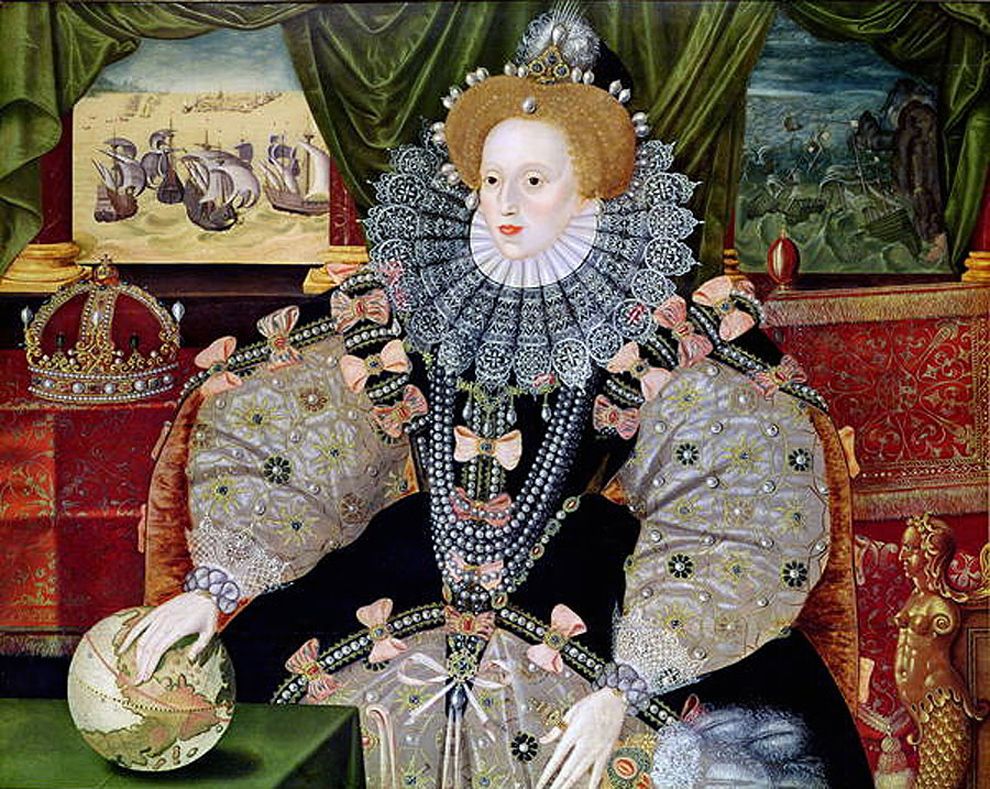
Henry VIII (1491-1547) and Elizabeth I (1533-1603):  England's two great Tudor monarchs, father and daughter, who reigned for over eighty years between them.  Their age was a turbulent time for England, marked by the Reformation, cultural advances and the beginnings of England's overseas empire.

Suleiman the Magnificent (1494-1566):  Long-reigning Turkish Sultan who brought the Ottoman Empire to its peak with the conquest of eastern Hungary, dominating the eastern Mediterranean and posing a challenge to Christian Europe.

William Tyndale (ca. 1494-1536): Reformation scholar known for his work translating Biblical scripture into English. Though put to death by Imperial officials, his legacy lives on in the greater part of the King James Bible.

Gustav I (1496-1560): First king in the Vasa dynasty, establishing Sweden's independence from the Danish-Norwegian union and overseeing the society's conversion to Lutheranism.

Charles V (1500-58): Habsburg Holy Roman Emperor and King of Spain for almost forty years.  He assembled a huge realm but faced increasing pressure from the Reformation in northern Germany, and ultimately bequeathed the Empire and the Spanish kingdom to different heirs.

John Calvin (1509-64): French-born theologian who became a Reformation leader in Geneva.  He founded the tradition of Dissenter sects that would be carried on by churches such as the Baptists, the Presbyterians and the Dutch Reformed Church.

Andreas Vesalius (1514-64): Flemish physician whose publication De Humani Corporis Fabrica established modern anatomy.

Philip II (1527-98):  Habsburg king of Spain for over forty years, ruling an empire that included much of the Americas, Italy, the Netherlands and eventually Portugal.  His challenges included the Counter-Reformation, economic absorption of inflationary bullion from the colonies, new English rivalry and a persistent insurgency in Holland.

Ivan the Terrible (1530-84): First Tsar of Russia, he turned the Grand Duchy of Muscovy into an empire, defeating Tartars and rebels and starting the eastward expansion into Siberia.  During his long reign he became notorious for tyrannical methods and explosive rage.


William the Silent (1533-84): Prince of Orange who led the Dutch rebellion against Spanish Catholic rule, becoming first Stadtholder of the United Provinces.

Michel de Montaigne (1533-92): French philosopher whose essays stand as an early example of modern thinking.


Domenikos

Theotokopolous "El Greco" (1541-1614): Greek-born painter who became the greatest artist of Habsburg Spain.

Thursday, October 04, 2018

FARGO

"'If he be Mr. Hyde,' he had thought, 'I shall be Mr. Seek'"--The Strange Case of Dr. Jekyll and Mr. Hyde

"Surmise!"--Fargo

We've started watching the library DVDs of the third season of Fargo, the loose and surprisingly adept reworking of the 1996 American gothic absurdist movie.  We started watching it together but I fell behind the others. (Usually, I'm the one who's ahead.) This one has Ewan MacGregor playing two brothers!

I'm in the last part of Dr. Jekyll and Mr. Hyde.  We get shown surprisingly little of Hyde, like Kurtz in Heart of Darkness. (Less can be more.) There's something Nietzschean about this double character!

Monday night I went to the Celtic Culture Meetup.  We were discussing Samuel Johnson's account of visiting the Scottish Hebrides, which I hadn't got around to reading. But it was still a good discussion, with a full turnout! (My mother was very interested in Samuel Johnson.)

Saturday, September 29, 2018

FOR YOUR EYES ONLY

On the witnesses describing Mr. Hyde: "Only on one point, were they agreed; and that was the haunting sense of unexpressed deformity with which the fugitive impressed his beholders"--Dr. Jekyll and Mr. Hyde

I saw two or three episodes of The Bridge, but it got too creepy for me.

Wednesday night I went to the Singing Meetup, where we sang Creedence Clearwater Revival's "Have You Ever Seen the Rain?"

I finished the history of modern Japan, and yesterday borrowed Robert Louis Stevenson's novella The Strange Case of Dr. Jekyll and Mr. Hyde from the Deer Park library.

Today I saw For Your Eyes Only with Dawna.  It's the first time I saw it since its 1981 release, and back then it was the first James Bond movie I'd seen, so I knew no points of comparison.  

In contrast to the previous series entry, Moonraker, this one's a visually unambitious production with the emphasis on action.  The first of five directed by John Glen, it has several well-staged "set pieces," especially the opening run-in with Blofeld. (The scenes with the young figure skater made Roger Moore look even older...)

I dug up another row of potatoes from the garden.  It was a good year:  our biggest bowl got filled again, and there are still a couple of rows left!

Sunday, September 23, 2018

THE BRIDGE

We've started watching The Bridge, a Scandinavian TV series where a woman's corpse turns up on the bridge between Sweden and Denmark and a team of Swedish and Danish detectives have to work together.  Actually, it's two women:  the body's top half is a Swedish politician the bottom half is a Danish sex worker, which is just the beginning of how complicated it is! (They're going to make a British version.)

It turned out I didn't need to get my eyesight checked after all.  The problem was that the sun's glare gave me headaches when I went outdoors on a clear day, and I solved it by adding shades to my glasses.

Wednesday night we screened Vanessa Redgrave's Mary, Queen of Scots for the History Meetup.  Nine people came, probably a record!

Thursday night at opera rehearsal we started with the Slaves' Chorus from Verdi's Nabucco.  I'd sung that piece a lot and knew my notes well, except I sometimes forgot I'm now singing tenor instead of baritone!  We also got a start on the Drinking Song from La Traviata.

Friday afternoon I saw some more videos with Dawna.  We looked at an I Dream of Jeannie episode where a space chimp gets turned into a human played by Larry Storch (I remember seeing that in my childhood!); and the pilot episode of The Odd Couple.  But I had a headache and left early.

I've got to the second season of Sailor Moon with subtitles. The story arc right now involves Alan and Ann, who seem like normal schoolkids but are actually aliens stealing human energy to feed their Doom Tree!  This arc includes my personal favourite episode, where they're putting on a play of Snow White, but the show gets interrupted by a clown monster and it turns into a Power Rangers show!  I like the closing credits' song. (See above.)

I've finally quit that game Empire.  Friday I captured a resource village in the winter realm and the owner's alliance blitzed me until almost all the buildings in both of my cities seemed to be on fire! (You have to put the fires out one at a time, and that can take over an hour for some.) My own alliance demoted me, as if I'd been aware of my status.  Why did I take such a risk? Because I'd been running out of doable quests to carry out.

Got my hair cut.

Tuesday, September 18, 2018

[Expletive Deleted]

Last Monday I found the book Anime Impact at the library with people reviewing the major Japanese cartoons, with a lot of personal experiences. Someone wrote, I josh you not: "Dragon Ball Z saved my life." (He was tempted to kill himself as a teenager, but the show gave him courage to carry on!) Brother John likes the pirate anime One Piece, so I'll have to try that one sometime.

Wednesday night I went to my first Music Meetup in a while. (It had been conflicting with my History Meetup screenings.) We sang "Hey Jude."

Thursday evening the opera chorus had its first session, at their new rehearsal location of St. Matthew's United Church, just a few blocks east of my home! (Very convenient.) Our two operas this year will be Mozart's The Marriage of Figaro and Verdi's La Traviata, which we haven't done for over a decade. Someone brought a cake, which was so good I ate three pieces.

Saturday afternoon I watched Jonathan Demme's Silence of the Lambs (for the second time) with Dawna.  I left before the last part where it got really scary!

Sunday was Read Out Loud Meetup, and since it was September the topic was banned and challenged books. (The event title was [Expletive Deleted]!) Noel was the only other person who showed up, but we had interesting conversation.  I read the opening pages of Theodore Dreiser's Sister Carrie; the closing pages of Richard Wright's Native Son; and the chapter of Mark Twain's Tom Sawyer where he and Huck witness a murder among bodysnatchers.

Today after the memoir group I went to the Indigo bookstore in the Manulife Centre and used half the gift coupons Miriam gave me to buy a Chromecast connection so we can stream movies online and watch them on our big TV set! (The place is pretty hectic since the upper floor is being renovated...)

Saturday, September 15, 2018

One of those days


Today Moira asked me to print out an address slip from an email she sent to my computer from hers.  As I did so, I saw the "delete" trash-can icon and somehow thought it was the PRINT icon!  So she had to send a second email.

Later I went to my eye doctor to get my sight checked, and they told me that they'd already booked me an appointment next Friday. When I got home it turned out that my father, also called James Matthews, had booked that appointment!

Also I went to the bank to pay my Visa bill.  I owed $221.61, so in the place where you write how much you want to repay I wrote $221.41!  Not a consequential mistake, but slightly embarrassing.

I just finished the Zoisite episodes of Sailor Moon.  What a great moment when Tuxedo Mask got stabbed in the back through Zoisite's treachery, and Sailor Moon's tears caused all seven of the Rainbow Crystals they'd been fighting over--I call them the Seven McGuffins--to float to her and form the Silver Crystal on her wand, and she realized that SHE was the Moon Princess they'd been looking for!  

There was another great moment soon after when she said she didn't want to fight any more, but when Kunzite (Malachite in the dubbed version) attacked them and left all the other Sailor Senshi unconscious, she raised her wand and managed to force him away!  And Zoisite got a remarkably graceful dying scene, considering how nasty he'd been. (He was a she in the manga, and became a she again in the dubbed version.)

I've been watching other anime through the Anilinkz website. One is Dragon Ball, which came before the more famous Dragon Ball Z.  It's full of panties jokes and such--I can see why the dubbers went straight to the Z series--but I have to admit it's pretty funny, and has an original look. (Believe it or not, it's a reworking of the Chinese legend about the Monkey King going west to India with a pig and a monk for enlightening Buddhist scriptures!)

I've also been watching Tenchi Muyo, about a dorky teenage boy who ends up having these kick-ass alien women living with him. (It's called the "harem" genre...) Apparently they got the idea from I Dream of Jeannie!

Monday, September 10, 2018

Bits and pieces

Hot Lips: "Frank, you are so above average!"--M*A*S*H

Saturday afternoon Dawna had the first Classic TV Meetup in a while.  We saw a Mission:  Impossible episode about finding stolen Inca treasures; the M*A*S*H episode where Frank was in temporary command and seized Hawkeye and Trapper's still; and a One Day at a Time episode where she applied for a job with a promiscuous boss.

Wednesday night the History Meetup discussed Babylon. Today the Classic Book Club discussed Heart of Darkness.

I liked the DIC company's dub of Sailor Moon, but I have to admit that the subtitled version is way better! (Some of the dialogue changes seem inexplicable, as if they were changing just for the sake of changing it.) And I don't miss the preachy "Sailor Says" messages at the end of each episode--"Life is tough, but I'm tougher!"--or Molly's Fran Drescher-like voice.

Thursday, September 06, 2018

The greatest people of the 17th century

I decided to write another partial list, of the greatest people of the 17th century.

Tokugawa Ieyasu (1543-1616):  Japanese warlord who became Shogun who united the empire and established a Tokyo (then Edo)-based dynasty that restricted foreign contact until the 19th Century.

Miguel de Cervantes Saavedra (1547-1616): Spanish writer who published Don Quixote in 1605 and 1615, creating the modern novel.

Henri IV (1553-1610): King of France, originally Protestant King of Navarre, who converted to Catholicism, ended France's religious wars and established the Bourbon Dynasty.

Nurhaci (1559-1626):  Aisin Gioro chieftain who solidified power in Manchuria, from which his successors would conquer China and establish the Qing Dynasty.


William Shakespeare (1564-1616): London writer whose many plays and poems transformed the English language and are still performed four centuries later around the world.

Galileo Galilei (1564-1648) & Johannes Kepler (1571-1630): Italian and German astronomers.  Galileo used the first telescopes to discover satellites of Jupiter and promote Copernicus' geocentric theory of the solar system; Kepler explained the elliptical orbits of the planets.

Claudio Monteverdi (1567-1643): Italian composer who brought together the many elements of opera and made them into a single form.

Prince Maurice of Nassau (1567-1625):  Stadtholder of Holland who organized the Dutch war effort against the Spanish, revolutionizing battlefield tactics and making the United Provinces of the Netherlands a permanent nation.

Michelangelo Merisi di Caravaggio (1571-1610):  Italian painter whose dramatic chiaroscuro style revolutionized baroque art.

Abbas I (1571-1629):  Shah of Persia who proved the greatest ruler of the Safavid Dynasty, he took his empire to its peak of power.


William Harvey (1578-1657): English physician who discovered the human body's system of blood circulation, making physiology possible.

Cardinal Richelieu (1585-1642): French cleric who became Foreign Minister and then Chief Minister under Louis XIII, centralizing the state and promoting a foreign policy of resisting Habsburg power in Austria and Spain. The superpower status of France under Louis XIV was his legacy.

Gustaf II Adolf (1594-1632):  King of Sweden who intervened on the Protestant side in Germany's Thirty Years War.  Though he was soon killed in battle, he established Sweden as the dominant Baltic power for the rest of the century.

Mikhail I (1596-1645):  Russian Tsar, originally a boyar, who established the Romanov Dynasty in 1613, ending the long period of chaos that followed the death of Ivan the Terrible.

Rene Descartes (1596-1650) & Blaise Pascal (1623-62): French thinkers who reshaped mathematics and philosophy.

Gian Lorenzo Bernini (1598-1680):  Italian sculptor and architect, a leading force in the baroque movement who gave modern Rome much of its look.

Diego Velazquez (1599-1660):  A leading baroque painter of Spain's "Golden Age."

Oliver Cromwell (1599-1658): English Parliamentarian general who defeated King Charles I in the English Civil War, executed him and ended up an unofficial king.  Though he died before establishing an effective successor and Parliament brought back the Stuart Dynasty, the Glorious Revolution of 1688 and the resulting Parliamentary rule were his ultimate legacy.

John IV (1604-56):  Duke of Braganza who became King of Portugal in 1640 after driving out the Spanish rulers.

Rembrandt van Rijn (1606-69):  Leading Dutch Master painter in Holland's Golden Age.

Antonie van Leeuwenhoek (1632-1723): Dutch scientist who used the new microscope to establish microbiology.

Louis XIV (1638-1715): Long-reigning French King who developed an absolutist regime from his base in the palace of Versailles.  He made France into western Europe's leading power, leading to inconclusive wars with a coalition led by England, Holland and Austria.


Isaac Newton (1643-1727) & Gottfried Liebniz (1646-1716): English and German mathematicians who independently developed calculus, leading to modern engineering and much else. Newton also explained gravity and created modern physics.

Kangxi (1654-1722):  Chinese Emperor who solidified Manchu control over the empire and started a long period of stability.

Sunday, September 02, 2018

Long weekend

Reading that manga of Sailor Moon got me interested in the TV series again.  I've found a webpage with the subtitled version and started watching that.  It even has the episodes the dubbed version skipped over, including one where Melvin the nerd gets possessed by the Negaverse and lifts his teacher's skirt!

I'll admit that the early episodes with Jadeite as the villain are pretty conventional.  The show picks up when they introduce Sailor Mercury and Sailor Mars and Nephrite becomes the new villain.  The story takes an amazing turn when her friend Molly falls in love with Nephrite and takes Sailor Moon's tiara for him. The next episode has a compelling climax when Nephrite sacrifices his life to save Molly!

Wednesday night I went to an Organizers Meetup.  They moved the location to 1 University Avenue and it was a bit of a challenge getting there.

Yesterday I went to The Beguiling and bought Shigeru Mizuki's manga biography of Hitler!  If anyone can show Der Fuhrer in a new way, Mizuki's the one.

The latest thing I've been watching on Youtube is episodes of Ebert and Siskel choosing the worst movies for the respective year!

The other day I was visiting Miriam and she took me to see her new boutique on Dundas Street between Spadina and Bathurst.  She's still setting it up, but it'll be interesting to see when it's ready!