Sunday, October 07, 2018

The greatest people of the 16th century

I shall now make my incomplete list of the greatest people of the 16th century:

Christopher Columbus (1451-1506) and Vasco da Gama (1460s-1524): Explorers who greatly widened the scope of the world as seen from Europe. Columbus, a Genoese working for Spain, discovered the sea route from Europe to America in 1492 and claimed Caribbean lands for his king, setting a precedent for brutal colonialism; da Gama, sailing south around Africa for Portugal, reached India in 1497, transforming world trade and starting a golden age for his kingdom.

Leonardo da Vinci (1452-1519), Michelangelo Buonarroti (1475-1564), and Rafael (1483-1520):  the three greatest artists of the Italian Renaissance, towering figures in Europe's art legacy.

Francisco Pizarro (1471-1541) and Hernan Cortes (1485-1547): The two most successful Spanish conquistadors.  Cortes conquered Aztec Mexico in 1521; Pizarro Inca Peru in 1532.  These conquests, both greatly aided by the accidental introduction of European smallpox, greatly increased gold and silver production in the Spanish empire.

Nicolaus Copernicus (1473-1543): Polish astronomer who published (on his deathbed) a theory that replaced the classical view of a geocentric universe with a heliocentric solar system.  This theory, resisted by the Roman Catholic Church, is central to modern astronomy and ultimately led to the theory of a universe with NO center.

Martin Luther (1483-1546):  German heretic whose 95 Theses started the Reformation, which resulted in most of northern Europe breaking away from the Roman Catholic Church.

Babur (1483-1530) and Akbar (1542-1605):  The two greatest rulers of Moghul India.  Babur, starting from today's Afghanistan, established the Moghul Dynasty in India with his 1526 conquest of Delhi; Akbar brought the empire to its pinnacle, dominating northern India.

Ismail I (1487-1524):  First Safavid Shah of Iran, unifiying the nation for the first time in centuries under the Shi'ite sect distinct from its Sunni rival the Ottoman Empire.

Saint Ignatius Loyola (1491-1556): First Superior General of the Society of Jesus.  The Jesuit order he founded, with an emphasis on intellectual rigor and assertive salesmanship, became one of the leading organs of the Counter-Reformation and is still active today.

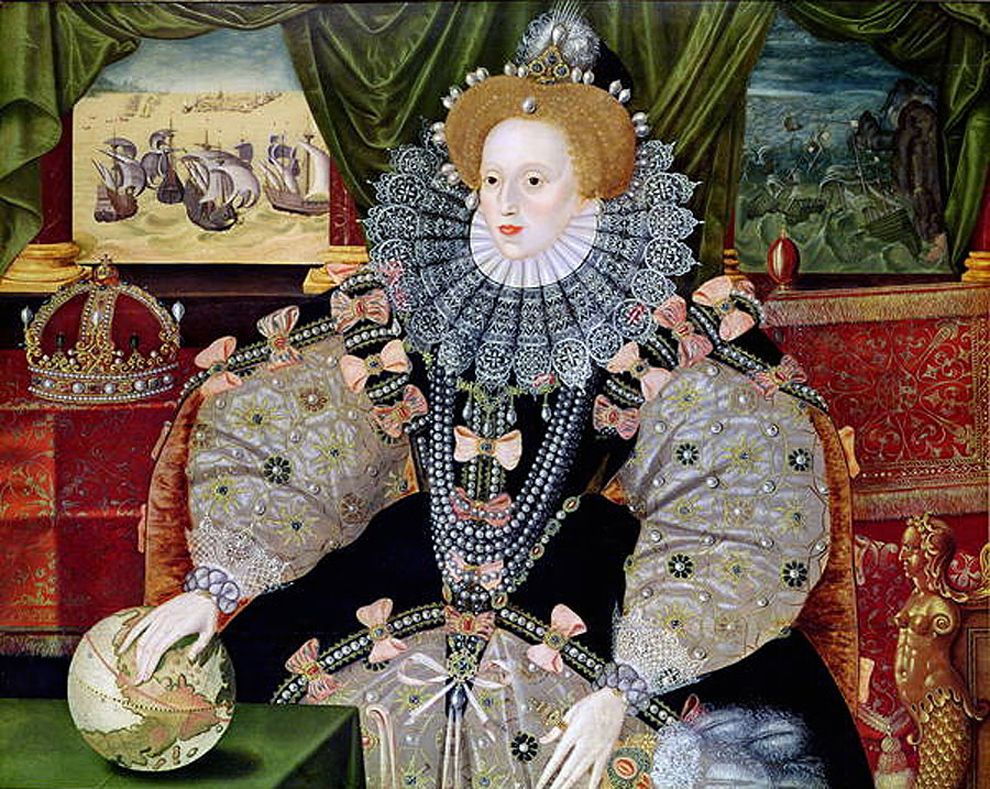
Henry VIII (1491-1547) and Elizabeth I (1533-1603):  England's two great Tudor monarchs, father and daughter, who reigned for over eighty years between them.  Their age was a turbulent time for England, marked by the Reformation, cultural advances and the beginnings of England's overseas empire.

Suleiman the Magnificent (1494-1566):  Long-reigning Turkish Sultan who brought the Ottoman Empire to its peak with the conquest of eastern Hungary, dominating the eastern Mediterranean and posing a challenge to Christian Europe.

William Tyndale (ca. 1494-1536): Reformation scholar known for his work translating Biblical scripture into English. Though put to death by Imperial officials, his legacy lives on in the greater part of the King James Bible.

Gustav I (1496-1560): First king in the Vasa dynasty, establishing Sweden's independence from the Danish-Norwegian union and overseeing the society's conversion to Lutheranism.

Charles V (1500-58): Habsburg Holy Roman Emperor and King of Spain for almost forty years.  He assembled a huge realm but faced increasing pressure from the Reformation in northern Germany, and ultimately bequeathed the Empire and the Spanish kingdom to different heirs.

John Calvin (1509-64): French-born theologian who became a Reformation leader in Geneva.  He founded the tradition of Dissenter sects that would be carried on by churches such as the Baptists, the Presbyterians and the Dutch Reformed Church.

Andreas Vesalius (1514-64): Flemish physician whose publication De Humani Corporis Fabrica established modern anatomy.

Philip II (1527-98):  Habsburg king of Spain for over forty years, ruling an empire that included much of the Americas, Italy, the Netherlands and eventually Portugal.  His challenges included the Counter-Reformation, economic absorption of inflationary bullion from the colonies, new English rivalry and a persistent insurgency in Holland.

Ivan the Terrible (1530-84): First Tsar of Russia, he turned the Grand Duchy of Muscovy into an empire, defeating Tartars and rebels and starting the eastward expansion into Siberia.  During his long reign he became notorious for tyrannical methods and explosive rage.


William the Silent (1533-84): Prince of Orange who led the Dutch rebellion against Spanish Catholic rule, becoming first Stadtholder of the United Provinces.

Michel de Montaigne (1533-92): French philosopher whose essays stand as an early example of modern thinking.


Domenikos

Theotokopolous "El Greco" (1541-1614): Greek-born painter who became the greatest artist of Habsburg Spain.

Thursday, October 04, 2018

FARGO

"'If he be Mr. Hyde,' he had thought, 'I shall be Mr. Seek'"--The Strange Case of Dr. Jekyll and Mr. Hyde

"Surmise!"--Fargo

We've started watching the library DVDs of the third season of Fargo, the loose and surprisingly adept reworking of the 1996 American gothic absurdist movie.  We started watching it together but I fell behind the others. (Usually, I'm the one who's ahead.) This one has Ewan MacGregor playing two brothers!

I'm in the last part of Dr. Jekyll and Mr. Hyde.  We get shown surprisingly little of Hyde, like Kurtz in Heart of Darkness. (Less can be more.) There's something Nietzschean about this double character!

Monday night I went to the Celtic Culture Meetup.  We were discussing Samuel Johnson's account of visiting the Scottish Hebrides, which I hadn't got around to reading. But it was still a good discussion, with a full turnout! (My mother was very interested in Samuel Johnson.)

Saturday, September 29, 2018

FOR YOUR EYES ONLY

On the witnesses describing Mr. Hyde: "Only on one point, were they agreed; and that was the haunting sense of unexpressed deformity with which the fugitive impressed his beholders"--Dr. Jekyll and Mr. Hyde

I saw two or three episodes of The Bridge, but it got too creepy for me.

Wednesday night I went to the Singing Meetup, where we sang Creedence Clearwater Revival's "Have You Ever Seen the Rain?"

I finished the history of modern Japan, and yesterday borrowed Robert Louis Stevenson's novella The Strange Case of Dr. Jekyll and Mr. Hyde from the Deer Park library.

Today I saw For Your Eyes Only with Dawna.  It's the first time I saw it since its 1981 release, and back then it was the first James Bond movie I'd seen, so I knew no points of comparison.  

In contrast to the previous series entry, Moonraker, this one's a visually unambitious production with the emphasis on action.  The first of five directed by John Glen, it has several well-staged "set pieces," especially the opening run-in with Blofeld. (The scenes with the young figure skater made Roger Moore look even older...)

I dug up another row of potatoes from the garden.  It was a good year:  our biggest bowl got filled again, and there are still a couple of rows left!

Sunday, September 23, 2018

THE BRIDGE

We've started watching The Bridge, a Scandinavian TV series where a woman's corpse turns up on the bridge between Sweden and Denmark and a team of Swedish and Danish detectives have to work together.  Actually, it's two women:  the body's top half is a Swedish politician the bottom half is a Danish sex worker, which is just the beginning of how complicated it is! (They're going to make a British version.)

It turned out I didn't need to get my eyesight checked after all.  The problem was that the sun's glare gave me headaches when I went outdoors on a clear day, and I solved it by adding shades to my glasses.

Wednesday night we screened Vanessa Redgrave's Mary, Queen of Scots for the History Meetup.  Nine people came, probably a record!

Thursday night at opera rehearsal we started with the Slaves' Chorus from Verdi's Nabucco.  I'd sung that piece a lot and knew my notes well, except I sometimes forgot I'm now singing tenor instead of baritone!  We also got a start on the Drinking Song from La Traviata.

Friday afternoon I saw some more videos with Dawna.  We looked at an I Dream of Jeannie episode where a space chimp gets turned into a human played by Larry Storch (I remember seeing that in my childhood!); and the pilot episode of The Odd Couple.  But I had a headache and left early.

I've got to the second season of Sailor Moon with subtitles. The story arc right now involves Alan and Ann, who seem like normal schoolkids but are actually aliens stealing human energy to feed their Doom Tree!  This arc includes my personal favourite episode, where they're putting on a play of Snow White, but the show gets interrupted by a clown monster and it turns into a Power Rangers show!  I like the closing credits' song. (See above.)

I've finally quit that game Empire.  Friday I captured a resource village in the winter realm and the owner's alliance blitzed me until almost all the buildings in both of my cities seemed to be on fire! (You have to put the fires out one at a time, and that can take over an hour for some.) My own alliance demoted me, as if I'd been aware of my status.  Why did I take such a risk? Because I'd been running out of doable quests to carry out.

Got my hair cut.

Tuesday, September 18, 2018

[Expletive Deleted]

Last Monday I found the book Anime Impact at the library with people reviewing the major Japanese cartoons, with a lot of personal experiences. Someone wrote, I josh you not: "Dragon Ball Z saved my life." (He was tempted to kill himself as a teenager, but the show gave him courage to carry on!) Brother John likes the pirate anime One Piece, so I'll have to try that one sometime.

Wednesday night I went to my first Music Meetup in a while. (It had been conflicting with my History Meetup screenings.) We sang "Hey Jude."

Thursday evening the opera chorus had its first session, at their new rehearsal location of St. Matthew's United Church, just a few blocks east of my home! (Very convenient.) Our two operas this year will be Mozart's The Marriage of Figaro and Verdi's La Traviata, which we haven't done for over a decade. Someone brought a cake, which was so good I ate three pieces.

Saturday afternoon I watched Jonathan Demme's Silence of the Lambs (for the second time) with Dawna.  I left before the last part where it got really scary!

Sunday was Read Out Loud Meetup, and since it was September the topic was banned and challenged books. (The event title was [Expletive Deleted]!) Noel was the only other person who showed up, but we had interesting conversation.  I read the opening pages of Theodore Dreiser's Sister Carrie; the closing pages of Richard Wright's Native Son; and the chapter of Mark Twain's Tom Sawyer where he and Huck witness a murder among bodysnatchers.

Today after the memoir group I went to the Indigo bookstore in the Manulife Centre and used half the gift coupons Miriam gave me to buy a Chromecast connection so we can stream movies online and watch them on our big TV set! (The place is pretty hectic since the upper floor is being renovated...)

Saturday, September 15, 2018

One of those days


Today Moira asked me to print out an address slip from an email she sent to my computer from hers.  As I did so, I saw the "delete" trash-can icon and somehow thought it was the PRINT icon!  So she had to send a second email.

Later I went to my eye doctor to get my sight checked, and they told me that they'd already booked me an appointment next Friday. When I got home it turned out that my father, also called James Matthews, had booked that appointment!

Also I went to the bank to pay my Visa bill.  I owed $221.61, so in the place where you write how much you want to repay I wrote $221.41!  Not a consequential mistake, but slightly embarrassing.

I just finished the Zoisite episodes of Sailor Moon.  What a great moment when Tuxedo Mask got stabbed in the back through Zoisite's treachery, and Sailor Moon's tears caused all seven of the Rainbow Crystals they'd been fighting over--I call them the Seven McGuffins--to float to her and form the Silver Crystal on her wand, and she realized that SHE was the Moon Princess they'd been looking for!  

There was another great moment soon after when she said she didn't want to fight any more, but when Kunzite (Malachite in the dubbed version) attacked them and left all the other Sailor Senshi unconscious, she raised her wand and managed to force him away!  And Zoisite got a remarkably graceful dying scene, considering how nasty he'd been. (He was a she in the manga, and became a she again in the dubbed version.)

I've been watching other anime through the Anilinkz website. One is Dragon Ball, which came before the more famous Dragon Ball Z.  It's full of panties jokes and such--I can see why the dubbers went straight to the Z series--but I have to admit it's pretty funny, and has an original look. (Believe it or not, it's a reworking of the Chinese legend about the Monkey King going west to India with a pig and a monk for enlightening Buddhist scriptures!)

I've also been watching Tenchi Muyo, about a dorky teenage boy who ends up having these kick-ass alien women living with him. (It's called the "harem" genre...) Apparently they got the idea from I Dream of Jeannie!

Monday, September 10, 2018

Bits and pieces

Hot Lips: "Frank, you are so above average!"--M*A*S*H

Saturday afternoon Dawna had the first Classic TV Meetup in a while.  We saw a Mission:  Impossible episode about finding stolen Inca treasures; the M*A*S*H episode where Frank was in temporary command and seized Hawkeye and Trapper's still; and a One Day at a Time episode where she applied for a job with a promiscuous boss.

Wednesday night the History Meetup discussed Babylon. Today the Classic Book Club discussed Heart of Darkness.

I liked the DIC company's dub of Sailor Moon, but I have to admit that the subtitled version is way better! (Some of the dialogue changes seem inexplicable, as if they were changing just for the sake of changing it.) And I don't miss the preachy "Sailor Says" messages at the end of each episode--"Life is tough, but I'm tougher!"--or Molly's Fran Drescher-like voice.

Thursday, September 06, 2018

The greatest people of the 17th century

I decided to write another partial list, of the greatest people of the 17th century.

Tokugawa Ieyasu (1543-1616):  Japanese warlord who became Shogun who united the empire and established a Tokyo (then Edo)-based dynasty that restricted foreign contact until the 19th Century.

Miguel de Cervantes Saavedra (1547-1616): Spanish writer who published Don Quixote in 1605 and 1615, creating the modern novel.

Henri IV (1553-1610): King of France, originally Protestant King of Navarre, who converted to Catholicism, ended France's religious wars and established the Bourbon Dynasty.

Nurhaci (1559-1626):  Aisin Gioro chieftain who solidified power in Manchuria, from which his successors would conquer China and establish the Qing Dynasty.


William Shakespeare (1564-1616): London writer whose many plays and poems transformed the English language and are still performed four centuries later around the world.

Galileo Galilei (1564-1648) & Johannes Kepler (1571-1630): Italian and German astronomers.  Galileo used the first telescopes to discover satellites of Jupiter and promote Copernicus' geocentric theory of the solar system; Kepler explained the elliptical orbits of the planets.

Claudio Monteverdi (1567-1643): Italian composer who brought together the many elements of opera and made them into a single form.

Prince Maurice of Nassau (1567-1625):  Stadtholder of Holland who organized the Dutch war effort against the Spanish, revolutionizing battlefield tactics and making the United Provinces of the Netherlands a permanent nation.

Michelangelo Merisi di Caravaggio (1571-1610):  Italian painter whose dramatic chiaroscuro style revolutionized baroque art.

Abbas I (1571-1629):  Shah of Persia who proved the greatest ruler of the Safavid Dynasty, he took his empire to its peak of power.


William Harvey (1578-1657): English physician who discovered the human body's system of blood circulation, making physiology possible.

Cardinal Richelieu (1585-1642): French cleric who became Foreign Minister and then Chief Minister under Louis XIII, centralizing the state and promoting a foreign policy of resisting Habsburg power in Austria and Spain. The superpower status of France under Louis XIV was his legacy.

Gustaf II Adolf (1594-1632):  King of Sweden who intervened on the Protestant side in Germany's Thirty Years War.  Though he was soon killed in battle, he established Sweden as the dominant Baltic power for the rest of the century.

Mikhail I (1596-1645):  Russian Tsar, originally a boyar, who established the Romanov Dynasty in 1613, ending the long period of chaos that followed the death of Ivan the Terrible.

Rene Descartes (1596-1650) & Blaise Pascal (1623-62): French thinkers who reshaped mathematics and philosophy.

Gian Lorenzo Bernini (1598-1680):  Italian sculptor and architect, a leading force in the baroque movement who gave modern Rome much of its look.

Diego Velazquez (1599-1660):  A leading baroque painter of Spain's "Golden Age."

Oliver Cromwell (1599-1658): English Parliamentarian general who defeated King Charles I in the English Civil War, executed him and ended up an unofficial king.  Though he died before establishing an effective successor and Parliament brought back the Stuart Dynasty, the Glorious Revolution of 1688 and the resulting Parliamentary rule were his ultimate legacy.

John IV (1604-56):  Duke of Braganza who became King of Portugal in 1640 after driving out the Spanish rulers.

Rembrandt van Rijn (1606-69):  Leading Dutch Master painter in Holland's Golden Age.

Antonie van Leeuwenhoek (1632-1723): Dutch scientist who used the new microscope to establish microbiology.

Louis XIV (1638-1715): Long-reigning French King who developed an absolutist regime from his base in the palace of Versailles.  He made France into western Europe's leading power, leading to inconclusive wars with a coalition led by England, Holland and Austria.


Isaac Newton (1643-1727) & Gottfried Liebniz (1646-1716): English and German mathematicians who independently developed calculus, leading to modern engineering and much else. Newton also explained gravity and created modern physics.

Kangxi (1654-1722):  Chinese Emperor who solidified Manchu control over the empire and started a long period of stability.

Sunday, September 02, 2018

Long weekend

Reading that manga of Sailor Moon got me interested in the TV series again.  I've found a webpage with the subtitled version and started watching that.  It even has the episodes the dubbed version skipped over, including one where Melvin the nerd gets possessed by the Negaverse and lifts his teacher's skirt!

I'll admit that the early episodes with Jadeite as the villain are pretty conventional.  The show picks up when they introduce Sailor Mercury and Sailor Mars and Nephrite becomes the new villain.  The story takes an amazing turn when her friend Molly falls in love with Nephrite and takes Sailor Moon's tiara for him. The next episode has a compelling climax when Nephrite sacrifices his life to save Molly!

Wednesday night I went to an Organizers Meetup.  They moved the location to 1 University Avenue and it was a bit of a challenge getting there.

Yesterday I went to The Beguiling and bought Shigeru Mizuki's manga biography of Hitler!  If anyone can show Der Fuhrer in a new way, Mizuki's the one.

The latest thing I've been watching on Youtube is episodes of Ebert and Siskel choosing the worst movies for the respective year!

The other day I was visiting Miriam and she took me to see her new boutique on Dundas Street between Spadina and Bathurst.  She's still setting it up, but it'll be interesting to see when it's ready!

Thursday, August 30, 2018

Music clips

Time for some more music clips:

Schubert, "Mille Cherubini in Coro." Schubert's cradle song translated into Italian, sung her by the one and only Luciano Pavarotti!

Liszt, third Liebestraum.  This is the famous one, a song about how you should love as long as you can because someday you'll be burying your sweetheart.  Margaret Price is the singer, James Lockhart the pianist.

Verdi, "O Patria Mia" from Aida.  One of my favorite arias from one of my favorite operas.  This is Leontyne Price in one of her greatest roles, in her last Met performance in 1985.

Wagner, finale from Das Rheingold.  The finale from Wagner's first Niebelung opera, where the gods enter their new castle of Valhalla, a mansion paid for with gold stolen from the Rhine maidens, who can be heard briefly. Wagner's music is a bit overwhelming, of course, but it can be remarkably pretty! (This is a 1958 recording directing by Georg Solti.)

Jacques Offenbach, Olympia's Aria from Tales of Hoffmann.  One of my favorite arias from another one of my favorite operas, sung here by Natalie Dessay. (I wish I could find out what production this is.  You don't see sights like those doll puppets every day!)

Edward Elgar, fourth Pomp and Circumstance March. This isn't the famous first one, but a nice one I first heard at Charles and Diana's 1981 wedding.

George Gershwin, Three Preludes for Piano.  One of Gershwin's classical-style compositions, but no less jazzy.  Played by Kristian Zimerman.

Franz Waxman, "Ireland" from The Spirit of St. Louis.  Billy Wilder's 1957 movie of Charles Lindbergh's flight is underrated, even if Jimmy Stewart was a bit too old. Waxman came up with a masterful score, here suggesting the anticipation that came with nearing the flight's completion. (Now I want to see the movie again.)

Loudon Wainwright III, "Dead Skunk in the Middle of the Road." Wainwright's biggest hit.  What can I say--it's always made me laugh!

Dickie Goodman, "Mr. Jaws." Novelty single from 1975.

The Clash, "Revolution Rock" from London Calling.  Left-wing new age band at their 1979 peak!

Gee, I posted eleven clips this time instead of ten!  Hope you won't expect me to do that every time...

Friday, August 24, 2018

The peaceable kingdom

"Do you have guns?  Any weapons?" "The best!  But we won't need them." "Glad to hear it.  I'm taking one anyway"--Planet of the Apes

Mother (on the design of their mansion): "We based it on Versailles' Hall of Mirrors." Daughter (whispering): "And Donald Trump's bathroom!"--Crazy Rich Asians

Sunday I saw Franklin J. Schaffner's Planet of the Apes (for the third time) at the Event Screen with the Movie Meetup group.  Written by Rod Serling, it's like a long episode of his The Twilight Zone:  Serling had a genius for sneaking social comment into the "weird tales" genre. (Cleverly, it works on multiple levels.) Charlton Heston's blowhard tendencies are surprisingly suitable here. Afterward we hung out at the Imperial Pub, where I had chili.

Then I went to Dora Keogh for the Reading Out Loud Meetup.  The topic was Canadian writing, and I titled the event "The Peaceable Kingdom."  I read "Death of a Centenarian" from Mazo de la Roche's second Jalna book and Bliss Carman's poem "A Vagabond Song." A group of Celtic musicians started jamming after a while, but we were in a separate room.

Wednesday I had lunch with Pam at the Schnitzel Hub.

I've finished A Very Short History of Babylon and started reading the Discovery issue of Lapham's Quarterly.

Father got a tooth pulled and he'll have to stay off hard food for a day or two.

Today I saw Crazy Rich Asians with Puitak and Gordon at the Yonge & Dundas. Someone said it was an Asian story Americanized, yet you could also say it was an American story Asianized! Conventional but enjoyable, with a good role for Awkwafina as Her Wisecracking Girlfriend. (Wait till the Kardashians see that Singapore has rich people tackier than them!) Afterward we went to Kimchi Korea House, where I had chicken bibimbap.

Thursday, August 23, 2018

Trailer clips

Just to be different, I thought I'd post some movie trailers I found on Youtube. (None of them spoil the big plot twists, like today's trailers tend to do.)

Blood and Black Lace.  The trailer for Mario Bava's 1964 Italian slasher movie scared me when I was little. (So did trailers for westerns.)

Vengeance! You haven't lived till you've seen a trailer for a 1970 Shaw Brothers chopsocky from Hong Kong. (The music at the beginning comes from the classic western The Big Country.)

Alien.  A classic spooky trailer for Ridley Scott's 1979 sci-fi thriller.

Airplane!  An hilarious trailer for the relentless 1980 disaster-movie spoof.

Heaven's Gate. I remember seeing this trailer for Michael Cimino's notorious 1980 western megaflop, and it does look rather promising.  BTW, the whole movie actually isn't that bad:  the dialogue is terrible ("I'm a victim of my class, James") but some of the crowd scenes are amazing!  It might have made a great silent movie.

Johnny Dangerously.  An offbeat trailer for Amy Heckerling's 1984 gangster-movie spoof.  Never saw it, but I recall it has the Weird Al Yankovic song "This is the Life," with the line "If money can't buy happiness, I guess I'll have to rent it!"

Problem Child.  I heard this 1990 comedy hit was tasteless, but Premiere magazine loved the trailer!

When the Cat's Away.  They used the French trailer for this 1996 French comedy in its American release too. (Most people wouldn't translate "Merde!" as "Damn!") Alas, I'm told that the movie itself wasn't half as funny as what we see here.

The Muse.  Albert Brooks presents his 1999 comedy in a very offbeat trailer!

Couples Retreat.  This 2009 comedy seems to be another case where the trailer was funnier than the movie...

Friday, August 17, 2018

HEART OF DARKNESS

"I have wrestled with death.  It is the most unexciting contest you can imagine.  It takes place in an impalpable grayness, with nothing underfoot, with nothing around, without spectators, without clamour, without glory, without the great desire of victory, without the great fear of defeat, in a sickly atmosphere of tepid scepticism, without much belief in your own right, and still less in that of your adversary.  If such is the form of ultimate wisdom, then life is a greater riddle than some of us think it to be"--Heart of Darkness

Mother Superior to aspiring nuns: "Remember, you can very easily cheat us, your sisters, but you can never cheat yourself, or God"--The Nun's Story

I just finished reading Joseph Conrad's Heart of Darkness for the Classic Book Club.  It has an inchoate, existential greatness.  (On the first page of the second chapter I noticed a quotation within a quotation within a quotation!)

Wednesday night I screened Fred Zinnemann's The Nun's Story with the History Discussion Group.  It's an emotionally powerful character study, with Audrey Hepburn at her best. (Part of it takes place in the Congo, which made it a good match for our earlier discussion.) Moira thought it picked up when the Mother Superior told her to fail her exam!  I liked the moment when she promised her father she'd make him proud but he said, "I don't want to be proud of you, I want you to be happy." I could imagine my own father saying something like that.

Last night I joined the Movie Meetup group to see a special screening of the famous Elvis '68 TV special. (It was the 41st anniversary of his death, which I remember hearing of on the radio.) I'd seen it several times before, but it's still great fun. Too bad about Elvis in the '60s:  instead of making all those stupid movies he should have been on television!

I've started digging up the potatoes.  They're pretty good this year.

Thanks to John Snow for sending me a copy of Longfellow's The Song of Hiawatha! (He noticed the earlier post where I said I wanted to read it.)

Tuesday, August 14, 2018

Music clips

"He resembled a pilot, which to a seaman is trustworthiness personified"--Heart of Darkness

Haven't posted any music clips for a while. (The summer makes me lazy, of course.)

Faure, Berceuse from The Dolly Suite.  I'm familiar with this piece because they used to play it at the end of the classical music show on CBC's FM radio, just before the news!

Lili Boulanger, "Pour les Funerailles d'un Soldat." Based on Alfred de Musset's poem "A Soldier's Funeral," this piece was first composed in 1912, on the eve of the Great War. (Lili Boulanger herself died in 1918 at just twenty-five!) You won't forget this.

Irving Berlin, "What'll I do?" A small gem by one of the great American songwriters, here arranged by Nelson Riddle and sung by William Atherton, with the opening credits of the underwhelming 1974 movie of The Great Gatsby. (But isn't that a great credit sequence?) 

Danny Kaye and the Andrews Sisters, "Civilization (Bongo, Bongo, Bongo.)" My father used to like this song!

Johnny Otis, "Willie and the Hand Jive." A rock & roll classic, being performed in Juke Box Rhythm, a 1959 movie from prolific B-movie producer Sam Katzman.

The Beatles, "She's Leaving Home" from Sergeant Pepper's Lonely Hearts Club Band.  A melancholy, underrated song from the Beatle's masterpiece album.

The Police, "Mother" from Synchronicity.  A funny song from the group's 1983 masterpiece album.

Peter Gabriel and Kate Bush, "Don't Give Up" from So.  A powerful, haunting duet by two singers in top form. (Elton John says the song helped him get sober!)

Dream Warriors, "Wash Your Face in My Sink" from And Now the Legacy Begins.  I'm not a big fan of rap, but I do like the Canadian group who did this 1991 piece.

Mark Ronson, "Uptown Funk." Here it's accompanied by a video of classic movie dancers! (How many can you name?)

Friday, August 10, 2018

THE MAN WHO LAUGHS

"At certain times, perhaps on long spring evenings, still rainy and sad, with the cold bulbs in bloom and a light too mild for promise drifting over the sea, I have opened the windows and felt the house shrink back into wood and plaster and those humble elements of which it is made, and the life in it subside, leaving me exposed, empty-handed, but feeling a fierce and lawless quiver of freedom, of loneliness too harsh and perfect for me now to bear"--Alice Munro

I refilled my Cipralex prescription last week, but was a few days late, so it affected my dreams for a while.  About a week ago I dreamed of having been in a long, successful, marriage! (Never dreamed like that before.) And the same night, I dreamed of a thriller where a human uncovered a conspiracy by sharks to recruit humans to feed other humans to them. The other night I dreamed of Xenophon's Anabasis and the famous scene where the vanguard reaches the heights from which they can see the sea.

Finally finished the home issue of Lapham's Quarterly today.

We finished the documentary series The Vietnam War.  Very fine.

Today I finally reread the Classics Illustrated version of Victor Hugo's The Man Who Laughs that I bought some ten years ago, for the first time since childhood. (I approached it like an appointment with the dentist.) I've actually read the book, set in England ca. 1700, which is about the deliberately disfigured boy Gwynplaine--his mouth carved into a permanent "smile"-- who turns out to be the heir to a House of Lords title.  It's one of Hugo's especially symbolic efforts: his companions are the mountebank Ursus (Latin for bear), his pet wolf Homo (Latin for man), and a blind girl called Dea (Latin for goddess).

It was the most disturbing of the Classics Illustrated comics I read when I was young. (Moira was equally traumatized.) I've seen other illustrators' work, and Paul Leni's silent movie that inspired Bob Kane to create Batman's enemy the Joker. But artist Norman Nodel's square, basic approach, lacking in "style," somehow gets to me more than they do!